21st Century Media Uses Project Explainer
Updates and preliminary work from our 4-year investigation of how people use media now
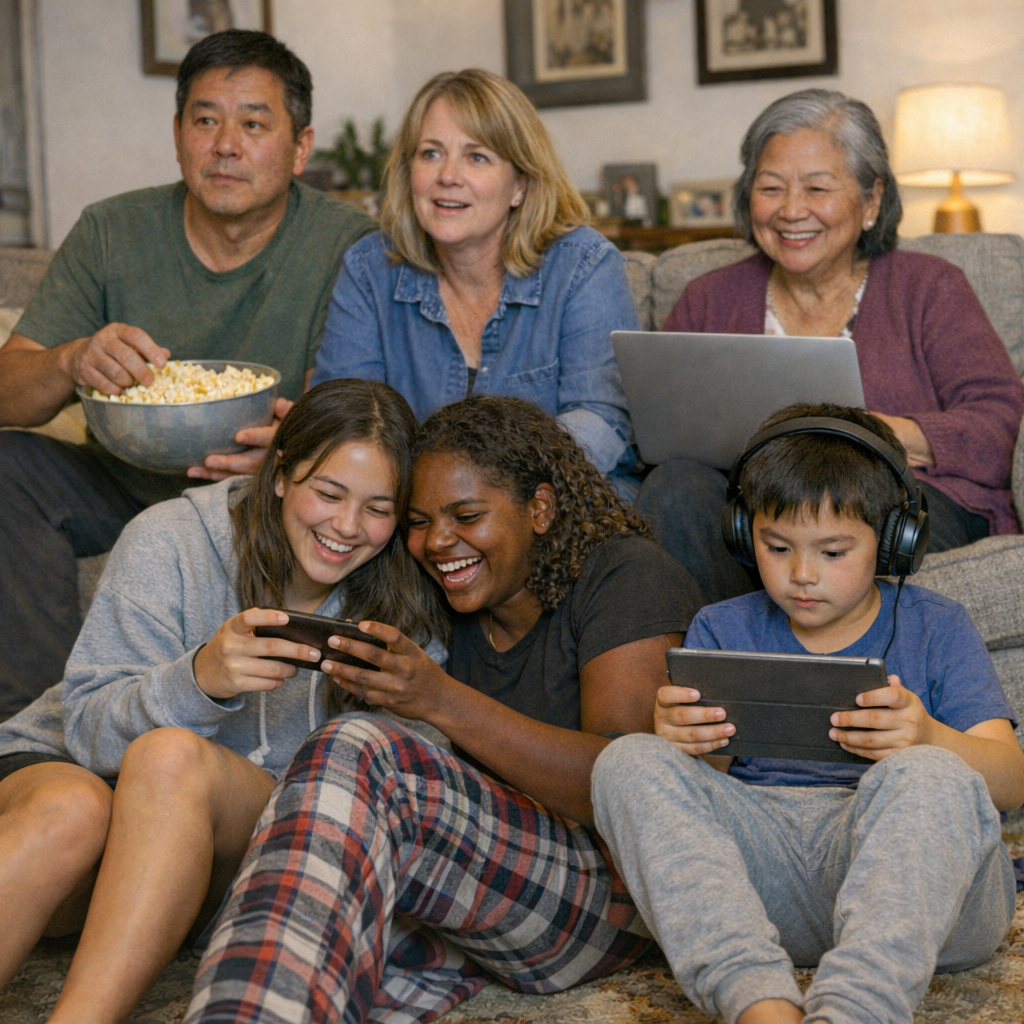
Our investigation of Media Use in the 21st Century seeks to update understanding of how and why people use media. The project begins broadly, investigating people’s ‘media diet’, or everything they read, watch, listen to, or play. We are exploring the media use that is part of leisure – so not media used within work lives – and tied to personal leisure or fulfilment. In some areas of life the lines are blurry, but drawing hard distinctions is not important to the general inquiry.
Many people now use a wide variety of media technologies, services, and devices in the course of daily life. We are most concerned to understand what motivates them to use those devices and their experience of communication and content – both of which are core to our understanding of ‘media’. We argue such an investigation is needed because the world of media use is so significantly changed since the twentieth century. Most of those we’ve studied so far have media diets reliant on video, audio, and word-based media that wouldn’t have been produced in the twentieth century when most media was shared by large audiences and created by a few organizations. Since then, many societies have experienced two decades of steady change as more and more people slowly adopted ‘new media’ technologies such as social media, YouTube, and streaming among others. During that time, many of those new media forms have also evolved considerably; it has been a dynamic quarter century.
The first stage of the project combines in-depth interviews and surveys (both recruited to be representative of the Australian population) to construct a rough sketch of general patterns of media use: what different media sources are priorities, what do users value about what they use, how much has their media consumption changed in recent decades. Of course there is great variation among how people use media; the array of content choice and comparative control over our media experience creates a lot of variability, but often patterns and general norms can be identified. Our inquiry is more concerned with developing an understanding of the broader forces that shape why people use media as they do it and what they value about their media use than with precisely capturing the number of minutes spent on different media services.
How are we investigating?
Understanding something as broad and varied as media use is challenging. We use in-depth interviews because they allow us talk with people and follow up for details and be sure that we understand each other. Interviews do not allow enough participants to make general claims or to be able to reliably tie certain attributes such as age or gender to particular behaviors. When possible, we ‘test’ some of the findings we discover in our interviews in broad, nationally representative surveys in order to have evidence of whether our observations are more broadly relevant. Studying media use in a time of continued change is tricky as people’s use continues to evolve along with new features from the services they use.
We first conducted 40, hour-long interviews with a cross section of Australians 18 and older that were recruited to match the general demographic variation of the population. These interviews were conducted by Zoom and explored people’s media diet, social media use, changes in media use, and the situations in which they use media (November 2024).
We used those interviews to construct a survey of 2020 Australians, also recruited to represent the population. The survey asks much more specific questions about different aspects of media diets and social media and YouTube use (November 2025).
We then interviewed 30 15–24-year-olds because the few younger people in the first set of interviews seemed to use media distinctively from those older, and those in their late 20s and early 30s spoke of how much their media use had changed after young adulthood. Those interviews focused on social media use, which was arguably the key type of media use for most – though not among all of the young adults. It also explored all the media content they typically use and how they access it (December 2025).